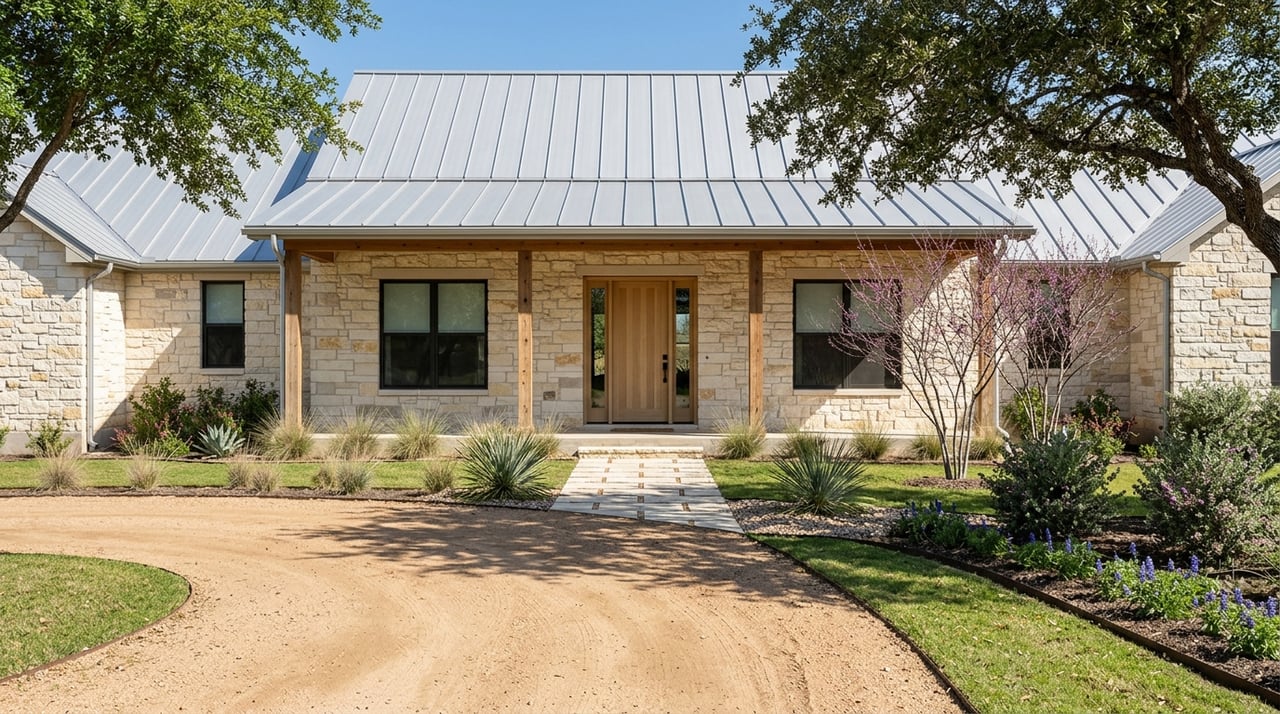
Kerrville In Town vs Outskirts: Find Your Best Fit
Real Estate Kelly Jo Gonzalez June 18, 2026
Real Estate Kelly Jo Gonzalez June 18, 2026
Choosing between an in-town Kerrville home and a place on the outskirts can feel simple at first. Then you start weighing walkability, yard size, drive times, recreation, and the day-to-day reality of how you want to live. If you are trying to decide which side of Kerrville fits you best, this guide will help you compare the tradeoffs clearly and confidently. Let’s dive in.
Kerrville is a relatively compact city, but Kerr County is much more rural at a larger scale. The city covers 21.93 square miles and has a population density of 1,107.1 people per square mile, while Kerr County averages 47.7 people per square mile.
That gap helps explain why an address in town can feel very different from a property just beyond the core. Even when the drive is short, the housing patterns, lot sizes, and daily routines can change fast.
Kerrville’s planning documents show that this is not just a choice between “downtown” and “country.” The city outlines several housing patterns that fall between those two ends of the spectrum.
Downtown is treated as Kerrville’s historic center for economic, entertainment, and community activity. Transitional residential areas are described as compact, walkable streets with small-lot detached homes, patio homes, townhomes, duplexes, apartments, and limited neighborhood-serving retail.
The city also identifies neighborhood residential areas with detached homes on lots typically under 1 acre, often with sidewalks and utility service. Farther out, estate residential usually means large-lot single-family homes on 2 to 5 acres, while rural living typically ranges from 2 to 10 acres and may rely more on private well and septic systems.
That range matters because Kerrville offers more than one version of “in town” and more than one version of “outskirts.” The right fit often comes down to how much convenience, space, and upkeep you want in your daily life.
If you like the idea of being close to daily activity, in-town Kerrville has a clear appeal. Downtown is centered around shopping, dining, arts, history, drinks, and events, with a pedestrian-oriented focus.
For some buyers, that means a lifestyle with less planning around every outing. You may be able to step out for coffee, dinner, or an event without building your whole evening around a drive.
The biggest in-town advantage is usually convenience. Kerrville’s downtown planning language emphasizes pedestrian activity, and the city supports compact housing patterns where efficient land use matters more than a large yard.
The zoning code reflects that in practical terms. Small-lot single-family and patio-home standards can start at 3,300 to 4,000 square feet, with lot widths of 30 to 40 feet.
If you want lower exterior maintenance and easier access to daily stops, that can be a strong match. It may also appeal if you are relocating and want a smoother transition into the area before taking on more land.
In-town living also connects well to some of Kerrville’s best-known public amenities. The Kerrville River Trail is an approximately six-mile, 10-foot-wide, ADA-accessible concrete trail with trailheads at several city locations, including Kerrville-Schreiner Park, Louise Hays Park, Riverside Nature Center, and the Dietert Center.
Trail access can be a meaningful lifestyle perk if you want regular outdoor time close to home. It is worth noting that floodplain conditions can affect segments, and city updates have indicated changing access in some areas, so current conditions should always be verified.
Louise Hays Park is another central amenity that strengthens the in-town lifestyle. It includes an interactive fountain, pavilions, playgrounds, and River Trail access in the southern portion of the central city.
Commute time is not the only factor in choosing where to live, but it does shape your weekly routine. Kerrville city’s mean travel time to work is 17.6 minutes, compared with 21.5 minutes in Kerr County.
That does not guarantee a shorter drive for every household. Still, it supports the general idea that living inside city limits can reduce daily driving on average.
If your priority is space, privacy, and a little more separation, the outskirts can be very appealing. In Kerrville’s planning framework, estate residential and rural living are designed for larger lots and a less compact setting.
Estate residential typically includes single-family homes on 2 to 5 acres. Rural living goes farther out, with lots commonly ranging from 2 to 10 acres and a greater chance of private well and septic systems.
For many buyers, the main draw is simple. You get more room to spread out.
That extra land can support a different kind of lifestyle. You may value wider views, more distance between homes, larger outdoor living areas, or just the feeling of having more breathing room.
This can be especially attractive if you are shopping for a Hill Country lifestyle property, a second home, or a residence where land matters as much as the house itself. It can also fit buyers who want a more private setting without leaving the Kerrville area entirely.
Outskirts living often shifts the focus from walkability to open-air recreation. Instead of prioritizing a quick walk to restaurants or events, you may care more about room to roam and easy access to larger outdoor spaces.
Kerrville-Schreiner Park is a strong example of that lifestyle. The city’s largest municipal park spans 517 acres and includes river access, camping, and more than 14 miles of hiking and mountain biking trails.
For some buyers, that type of recreation matters more than being close to the downtown core. If your weekends are more about trails, river access, and outdoor space than a pedestrian-oriented setting, the outskirts may feel like a better fit.
The tradeoff is usually convenience. Lower county density and longer average commute times suggest that routine errands and daily stops may involve more driving, even if the property itself offers more space and privacy.
You may also need to think more carefully about infrastructure. In rural living areas, private well and septic systems are more common than in compact city neighborhoods.
That does not make outskirts living harder by default. It simply means your decision should include the practical side of property ownership, not just the view from the porch.
When buyers compare in-town Kerrville with the outskirts, a few questions usually bring the answer into focus.
This is often the biggest fork in the road. Downtown Kerrville is the city’s pedestrian-oriented core, while estate and rural areas are built around larger lots and more separation.
If you want to be close to restaurants, events, parks, and trail access, in-town may feel easier. If your priority is room, privacy, and a more spread-out setting, the outskirts may be the better fit.
Bigger land can be a dream, but it is also a responsibility. In-town small-lot standards can be as little as 3,300 to 4,000 square feet, while estate lots are generally 2 to 5 acres.
Think about how you actually want to spend your weekends. Some buyers love the idea of land until they picture the upkeep that comes with it.
If you are comparing rural properties, this question matters. Kerrville’s planning documents note that private well and septic systems are more common in rural living areas.
If you have never owned that kind of property before, it helps to factor that into your comfort level early. A home search should match both your lifestyle goals and your readiness for the property’s systems.
Kerrville gives you more than one way to enjoy the outdoors. In-town buyers may lean toward the River Trail and Louise Hays Park, while outskirts buyers may prioritize acreage, wider views, and access to places like Kerrville-Schreiner Park.
Neither option is better across the board. The better question is what kind of outdoor access you want woven into your everyday routine.
A few extra minutes may not sound like much at first, but it adds up over a week. If you prefer quick trips for errands, dining, and activities, in-town convenience may carry real value.
If you are happy to trade more driving for more space, the outskirts may still win easily for you. This is one of the most personal tradeoffs in the whole decision.
Factor | In-Town Kerrville | Outskirts or Acreage |
|---|---|---|
Lot size | Often smaller, with some lots starting around 3,300 to 4,000 square feet | Often larger, with estate lots typically 2 to 5 acres |
Lifestyle | More walkable and activity-focused | More private and space-focused |
Recreation style | River Trail, Louise Hays Park, downtown access | Kerrville-Schreiner Park, land, views, outdoor space |
Driving | Shorter average city commute time | More driving is common on average |
Utilities and systems | More typical city utility patterns | Well and septic are more common in rural living areas |
If you want easier daily access to dining, events, trails, and public amenities, in-town Kerrville may check more boxes. It can be a smart choice if you value convenience, lower-maintenance lots, and a more connected feel.
If your vision of home includes more land, more privacy, and a stronger Hill Country sense of space, the outskirts may be the better match. That can be especially true for lifestyle buyers, second-home shoppers, or anyone who sees the land itself as part of the investment.
The best choice is rarely about what sounds ideal on paper. It is about how you want your mornings, evenings, weekends, and routines to actually feel.
If you want help comparing in-town homes, acreage properties, or relocation options around Kerrville, Kelly Jo Gonzalez can help you narrow the search with local insight and concierge-level guidance.
Stay up to date on the latest real estate trends.
As your real estate agent, Kelly Jo Gonzalez is committed to making the home buying and selling process as smooth as possible. She will listen to your needs and criteria in finding you your “Dream House” and will be dedicated to keeping you informed throughout each step.
Kelly Jo Gonzalez
321 Hale Street, Fredericksburg, TX 78624 1002 River Road, Suite 300 Boerne, TX 78006