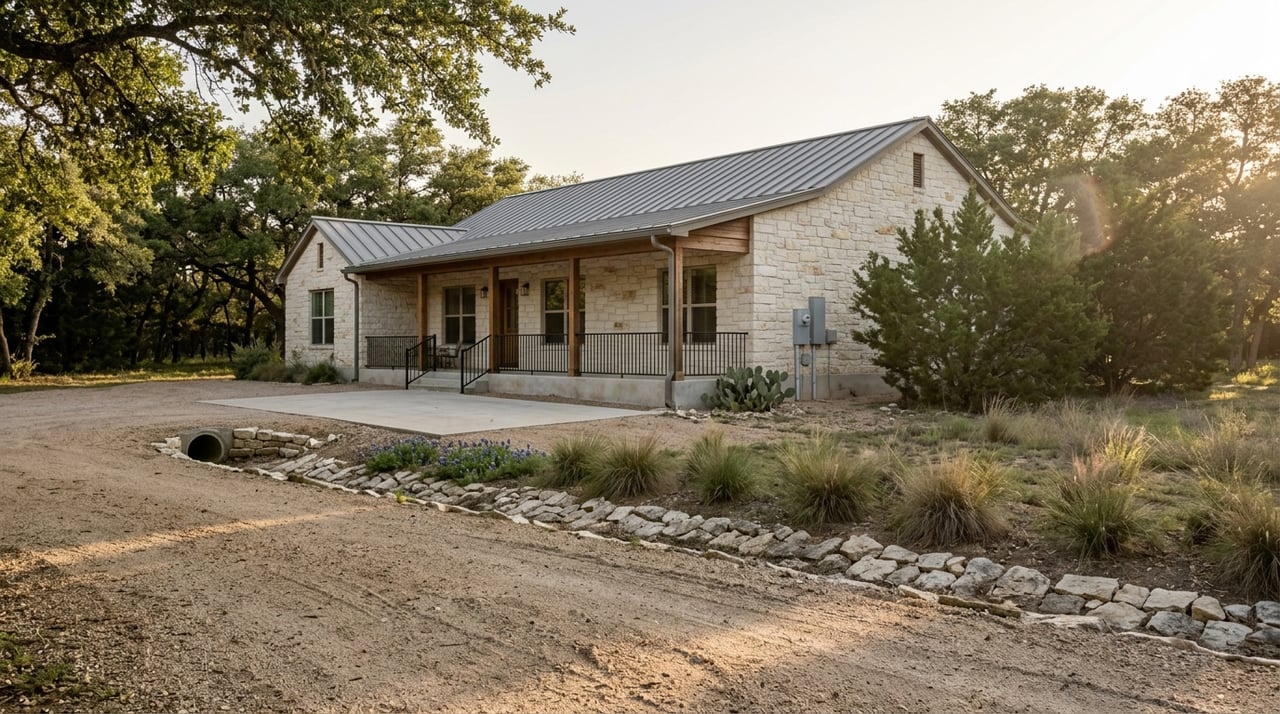
Buying Land Near Boerne: Key Acreage Considerations
April 2, 2026
April 2, 2026
If you are dreaming about more space, bigger views, and room to build near Boerne, acreage can be incredibly appealing. It can also come with a very different checklist than buying a home in town, especially when it comes to utilities, access, septic, wells, and land use. Before you fall in love with a tract, it helps to know what can affect cost, timing, and what you can actually do with the property. Let’s dive in.
Buying acreage near Boerne is not always as simple as buying a house on a city lot. Many rural or semi-rural properties rely on private systems and county-level permitting instead of municipal connections.
According to the City of Boerne Utilities Department, only properties inside city limits have access to city water and wastewater service. Electric and natural gas may extend outside city limits depending on service territory, but water and sewer are often the biggest unknowns for acreage buyers.
That means your due diligence needs to go beyond the home itself. You may need to confirm whether the property can support a septic system, whether a well is in place or allowed, and what permits or approvals may be required before you build or improve the land.
One of the first questions to ask is whether the property is inside Boerne city limits and connected to city utilities. If it is not, you should not assume a simple tap-in is possible.
The city states that only properties within city limits have city water and wastewater service. The city also requires a pre-design meeting for utility planning, where utility locations, easements, design standards, and regulatory requirements can be reviewed before design begins.
In unsewered parts of Kendall County, wastewater planning often means septic. The Kendall County health department oversees this wastewater program, which is a key reason acreage purchases often need more upfront investigation than an in-town home.
The Texas Commission on Environmental Quality says permits are required for on-site sewage facilities, and local authorities can be stricter than state minimums. Kendall County requires a septic permit before installation, repair, or retrofit, and the permit checklist includes an application, proof of ownership, a property survey, and a site plan with septic design.
If the system is aerobic, the county also requires a maintenance contract and affidavit. The county notes that a septic permit should generally be approved or denied within 30 days after the application is determined complete.
Acreage ownership costs do not stop after installation. Kendall County notes that routine maintenance is required on all onsite wastewater treatment systems, and even conventional gravity systems need periodic pumping.
That is important when comparing one tract to another. A lower purchase price does not always mean lower total cost if site conditions make wastewater planning more complex.
If a property depends on a private well, treat that well as a major part of your inspection process. Kendall County’s health department issues permits and inspections for well construction, repair, capping, and sealing, so records matter.
The county’s well homeowner guidance points buyers to the Texas Groundwater Protection Committee, which says private well water quality is not regulated by the State of Texas. In plain terms, that means the owner is responsible for testing.
The committee recommends annual testing for E. coli bacteria and nitrate-nitrogen. It also strongly recommends using a licensed water-well driller or pump installer for inspections, and buyers should ask for the well report and review the well’s location in relation to property lines, septic tanks, septic fields, and flood-prone areas.
Kendall County is also part of Groundwater Management Area 9, which includes Cow Creek Groundwater Conservation District. Current district rules say some wells must be registered or permitted, district staff may inspect wells and well sites, and registration does not guarantee groundwater availability.
On acreage, access is not just about whether you can physically drive to the property. It is about whether you have legal access, what kind of road serves the tract, and what permits are required before improvements begin.
Kendall County states that a 911 Rural Address and Access Permit must be obtained before Development, Septic, or Well Permits. If your driveway connects to a public county road, you will also need an Access Permit before building or modifying that driveway.
If access is from a private road, the access permit is no longer required, but an address request is still required. If access is from a state highway, buyers must work with TxDOT.
A current survey is one of the most important documents in an acreage transaction. It can help confirm boundaries, access, easements, and the locations needed for septic, utilities, and future improvements.
This is not just a best practice. Kendall County development regulations tie surveys and site plans into the permitting process, and the county’s development rules show how closely access, septic planning, and site layout all connect.
Hill Country properties can have beautiful topography, but they can also have drainage and floodplain considerations that affect where and how you build. This is one reason floodplain review should happen early, not after you already have plans drawn.
The City of Boerne floodplain program directs users to FEMA map resources, and Kendall County development forms ask whether improvements are in the 100-year flood hazard area and whether a FEMA elevation certificate is required.
For buyers, the takeaway is simple. A property can look ideal on the surface and still have constraints that affect homesites, driveways, utilities, or future additions.
Acreage buyers often ask whether a tract comes with agricultural valuation and whether that status will continue after closing. The answer is not automatic just because the land is rural.
The Texas Comptroller says land must be currently devoted principally to agricultural use at a degree of intensity generally accepted in the area. In most cases, it also must have been devoted to agriculture or timber production for at least five of the past seven years.
If land receiving agricultural appraisal changes to a non-agricultural use, rollback tax can apply for the previous three years. Kendall County’s ag-use guidance also notes that casual uses, such as a home vegetable garden, do not qualify.
Before you move forward on acreage near Boerne, make sure you have answers to these questions:
Acreage transactions usually involve more moving parts than a standard in-town purchase. Based on the city and county guidance in this market, some of the most important outside professionals may include a Texas land surveyor, a title company, a licensed septic contractor or designer, a licensed well driller or pump installer, and county permit or floodplain staff.
When you are buying in the Hill Country, having the right local guidance can make the process much smoother. If you want help evaluating acreage near Boerne and building a smart due diligence plan, Kelly Jo Gonzalez can help you navigate the details with a concierge approach tailored to your goals.
Stay up to date on the latest real estate trends.

Real Estate
As your real estate agent, Kelly Jo Gonzalez is committed to making the home buying and selling process as smooth as possible. She will listen to your needs and criteria in finding you your “Dream House” and will be dedicated to keeping you informed throughout each step.

Kelly Jo Gonzalez
321 Hale Street, Fredericksburg, TX 78624 1002 River Road, Suite 300 Boerne, TX 78006