Fredericksburg TX Neighborhoods Guide for Every Lifestyle
May 7, 2026
May 7, 2026
If you picture Fredericksburg as one kind of neighborhood, you may miss what makes this market so appealing. In a relatively small area, you can move from walkable historic blocks and cottage-style homes to edge-of-town neighborhoods, wine-corridor settings, and private country acreage. If you are trying to decide where you fit best, this guide will help you compare lifestyle, setting, and tradeoffs so you can focus your search with confidence. Let’s dive in.
Fredericksburg’s layout goes back to the city’s 1846 founding. Early immigrant families received a 100-by-200-foot town lot along with a 10-acre outlot, which helps explain why the area still has both compact historic streets and larger-lot living patterns today.
That history still shows up in how the market feels on the ground. The city identifies downtown, uptown, and a residential focus area east of the city limits between RR 1631 and Highway 16. At the county level, Gillespie CAD also breaks the area into city neighborhoods and rural groupings, which means Fredericksburg is best understood as a collection of lifestyle zones rather than one uniform housing market.
For many buyers, the heart of Fredericksburg starts in the historic core. Marktplatz anchors downtown events, and Main Street is lined with more than 150 shops, boutiques, art galleries, restaurants, tasting rooms, a brewpub, and museums. If walkability is high on your list, this is the area that delivers the most convenient access to daily activity and visitor attractions.
Downtown also has a layered architectural story. Early homes included log houses and half-timbered fachwerk homes, followed later by more substantial stone homes, and many of those structures still remain. That gives the historic core a strong sense of place that buyers often find hard to replicate in newer areas.
Still, downtown living comes with tradeoffs. The city’s plan supports Main Street as a center for entertainment, shopping, and restaurants, and parking can be challenging on busier days. If you want to step outside and be near the center of activity, this may feel exciting and convenient, but if you are looking for a quieter setting, you may prefer to search beyond the core.
In-town historic properties often come with character, but they can also come with added review requirements. Exterior changes to historic properties may require a Certificate of Appropriateness, and city design guidelines apply within the local historic district and to individual landmarks.
For you as a buyer, that means charm and preservation often go hand in hand. If you love original details and established streetscapes, this can be a major plus. If you want maximum flexibility for exterior updates, it is worth understanding those rules early in your search.
Historic downtown tends to suit buyers who value:
It may be less ideal if you want:
Just outside the most historic blocks, Fredericksburg shifts into transitional in-town areas that still feel connected to downtown life. The city’s plan calls for Main Street character to continue from Crockett Street to Cherry Street, with similar scale and setbacks, even when newer buildings interpret that character in a more contemporary way.
These areas often appeal to buyers who want proximity without being right in the center of the busiest blocks. You may still enjoy a close-to-town feel, but with a little more breathing room and a broader mix of home styles.
Fredericksburg’s housing stock outside downtown is still largely low-density residential, but medium-density areas add more variety. According to the comprehensive plan, these areas can include smaller-lot detached homes, duplexes, and townhomes.
In practical terms, this creates options for buyers who want lower-maintenance living while staying close to town. You may find traditional single-family homes, infill development, and housing types that work well for those seeking convenience without the full demands of a larger property.
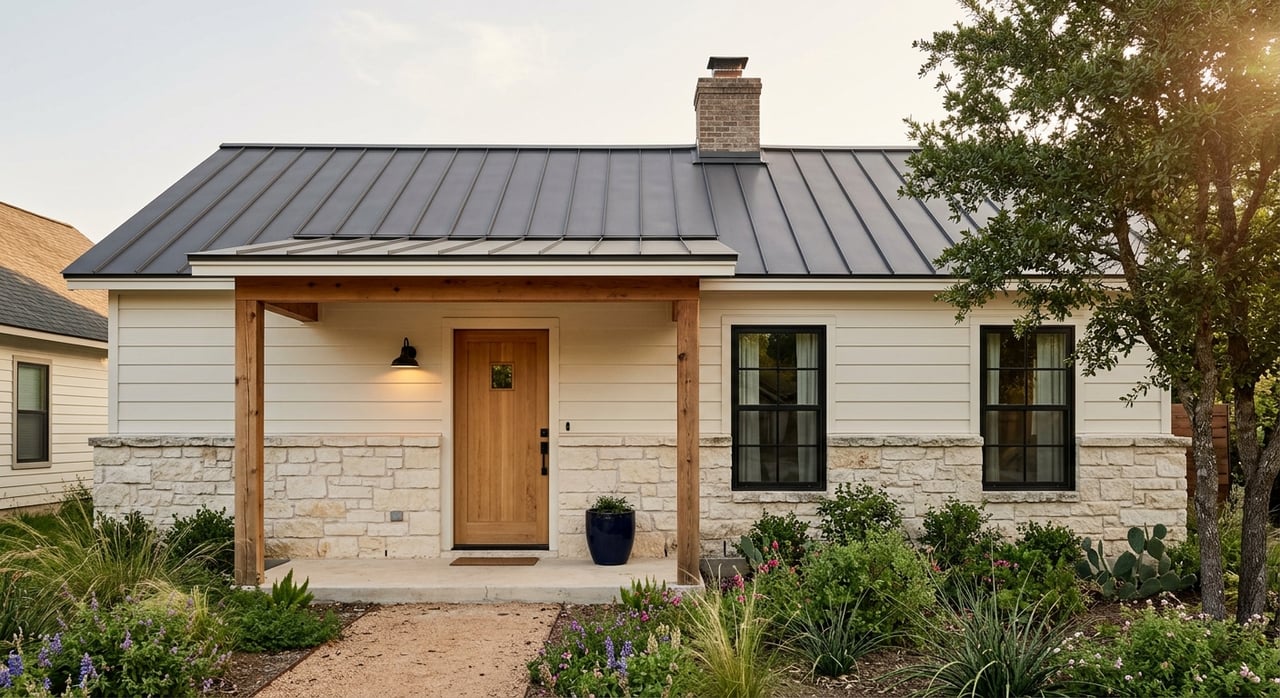
If your ideal Fredericksburg home is charming, manageable, and close to local activity, in-town cottages are worth a close look. The city specifically supports smaller attached housing within walking distance of Main Street and second cottage units on larger lots when they fit neighborhood character.
That planning approach helps explain why many in-town properties prioritize location and scale over expansive yards. For some buyers, that is exactly the point. You may be trading acreage for convenience, but gaining easier access to the parts of Fredericksburg that make daily life enjoyable.
Smaller in-town homes often appeal to:
These homes can be a strong fit when your priority is lifestyle access rather than land size.
Fredericksburg’s wine-country identity plays a major role in how some areas feel, especially along U.S. Highway 290. The area features more than 75 wineries, over 30 wine-tour companies, and more than 10 downtown tasting rooms. Several wineries along the corridor operate as estate-vineyard destinations, reinforcing the connection between this part of the market and the broader Hill Country wine experience.
For buyers, the eastern approaches to town often feel more scenic, visitor-oriented, and closely tied to wine-country activity. That can be a draw if you are looking for a setting that feels distinctly Hill Country and connected to one of Fredericksburg’s best-known lifestyle features.
The city’s land-use plan helps explain why some edge-of-town locations can feel different from a typical suburban neighborhood. Along major entry corridors, the desired future pattern is to cluster commercial uses at intersections, with mixed residential and nonresidential uses between them. Traditional detached homes are considered less suitable directly on busy highway corridors.
That means some properties near major roads may feel transitional rather than tucked away, even if they are close to town. When you tour these areas, it helps to think carefully about whether quick access or a quieter setting matters more to you.
If you want more privacy, open space, and room to spread out, the county market becomes especially important. Gillespie CAD separates the countryside into rural abstract-land neighborhoods and rural subdivision neighborhoods, with area groupings such as Hilltop/Cherry Springs, Stonewall/Luckenbach, and the Highway 16 South and 87 South corridors.
This is the side of Fredericksburg living that attracts buyers who care more about views, outdoor use, and privacy than walkability. Instead of a home that connects you to Main Street in minutes, you may be choosing a property that offers elbow room, a slower pace, and a stronger sense of separation from visitor activity.
Acreage and estate properties usually offer a different value equation than in-town homes. In many cases, you are trading immediate convenience for space and a more private daily setting.
Country properties can be a strong fit if you want:
They may require more driving for dining, shopping, and events, but for many buyers that tradeoff is well worth it.
The best Fredericksburg neighborhood for you depends less on a label and more on how you want to live. A buyer who wants walkability, historic character, and easy access to Main Street will likely focus on the core or close-in neighborhoods. A buyer who values privacy, views, and larger parcels may feel more at home in the county corridors and rural groupings.
It can help to ask yourself a few simple questions before you start touring:
When you answer those questions honestly, your ideal area usually becomes much clearer.
One of Fredericksburg’s strengths is that it does not offer just one version of Hill Country living. The market moves from compact, compatibility-driven historic streets to transitional in-town pockets, then out toward wine-corridor settings and true country estates.
That range gives you real choice. Whether you are relocating, buying a second home, exploring investment potential, or searching for a signature Hill Country property, Fredericksburg offers distinct lifestyle options within one connected market.
If you want help narrowing down which part of Fredericksburg fits your goals, local guidance can make the process much simpler. From walkable in-town cottages to private acreage and estate properties, Kelly Jo Gonzalez offers concierge-level Hill Country insight to help you move forward with clarity.
Stay up to date on the latest real estate trends.
Real Estate
Options in the Texas Hill Country
As your real estate agent, Kelly Jo Gonzalez is committed to making the home buying and selling process as smooth as possible. She will listen to your needs and criteria in finding you your “Dream House” and will be dedicated to keeping you informed throughout each step.
Kelly Jo Gonzalez
321 Hale Street, Fredericksburg, TX 78624 1002 River Road, Suite 300 Boerne, TX 78006